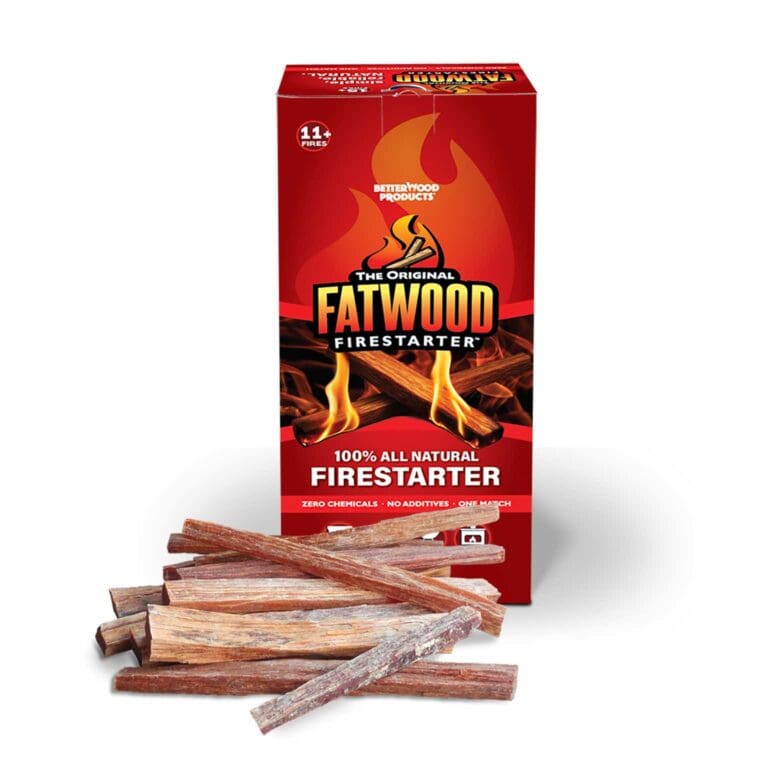
Fatwood is pine wood saturated with natural resin, usually split from old pine stumps. That resin makes it one of the best natural fire starters you can find. A stick lights with one match, and its shavings will even catch a spark, wet or dry.
You may also know fatwood as fat lighter. Use the sticks to start a fire in your fireplace, grill or campfire, or shave off slivers to catch a spark. Here’s what it is and how to use it.
What Exactly Is Fatwood?
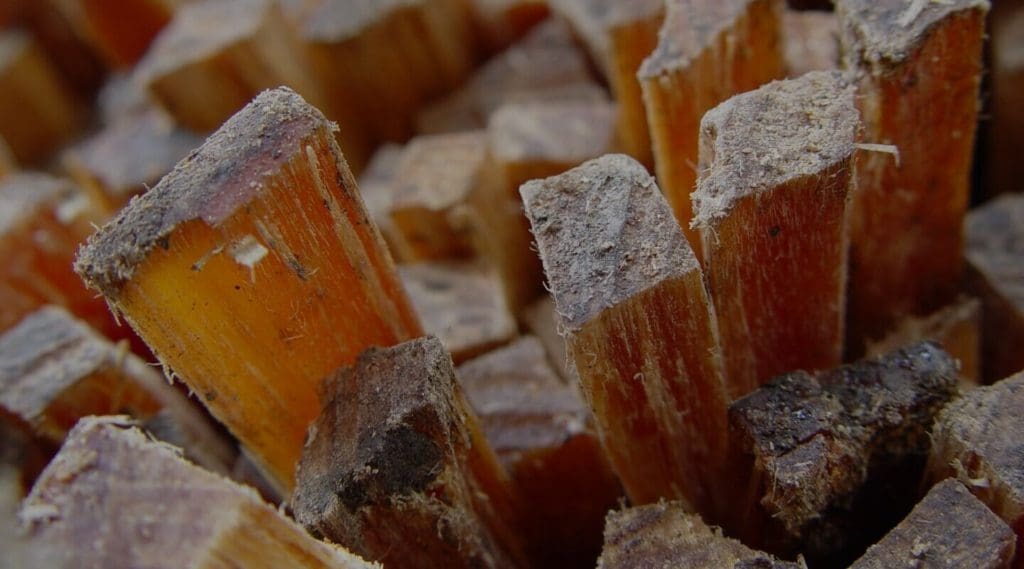
Fatwood is dried pine wood that is full of resin, also called pitch. It usually comes from old pine stumps left behind after logging, split into sticks. As the stump wood hardens over time, the resin concentrates, creating an all-natural, chemical-free fire starter.
When a pine tree dies, resin from the roots is drawn into the stump. The stump becomes saturated, and as the outer wood rots away, the resin-soaked wood at the core hardens. Those dark veins you see running through fatwood are the resin.
The resin contains terpenes, the main component of turpentine, which is highly flammable. That’s why fatwood shavings can be lit with just a spark, even when wet. No lighter? No problem. Fatwood shavings make excellent tinder for any fire.
Where to Find Fatwood
If you don’t want to go wandering through the woods, you can buy fatwood ready to use, in everything from 1.5 lb boxes up to 50 lb boxes, burlap bags and bundles. Buying it is the easiest way to start enjoying it fast.
Buy Better Wood Products fatwood at



But sometimes finding it yourself is half the fun, and it makes your fires that much more enjoyable.
Fatwood is often easier to find than you’d think. Start by looking for pine trees. Chances are there are some nearby. Then look for stumps, ideally old, rotting ones, which have had plenty of time for the resin to collect. Fresh stumps usually have little fatwood. The good news is that by then the resin is no longer sticky like sap, so you won’t have sticky fingers for weeks.
The most fatwood is right at the top of the taproot, where the roots and trunk meet. Sometimes you need to cut down through the stump to reach it. If there’s fatwood, it will feel rock hard compared to the rotting stump, and the color will be obvious right away.
How Do I Get the Fatwood Out?
If you can pull the stump out of the ground, the fatwood is easy to harvest. Otherwise, you’ll need to cut into the stump. Close to home, a chainsaw works. Out on the trail, hope you brought a trusty hatchet.
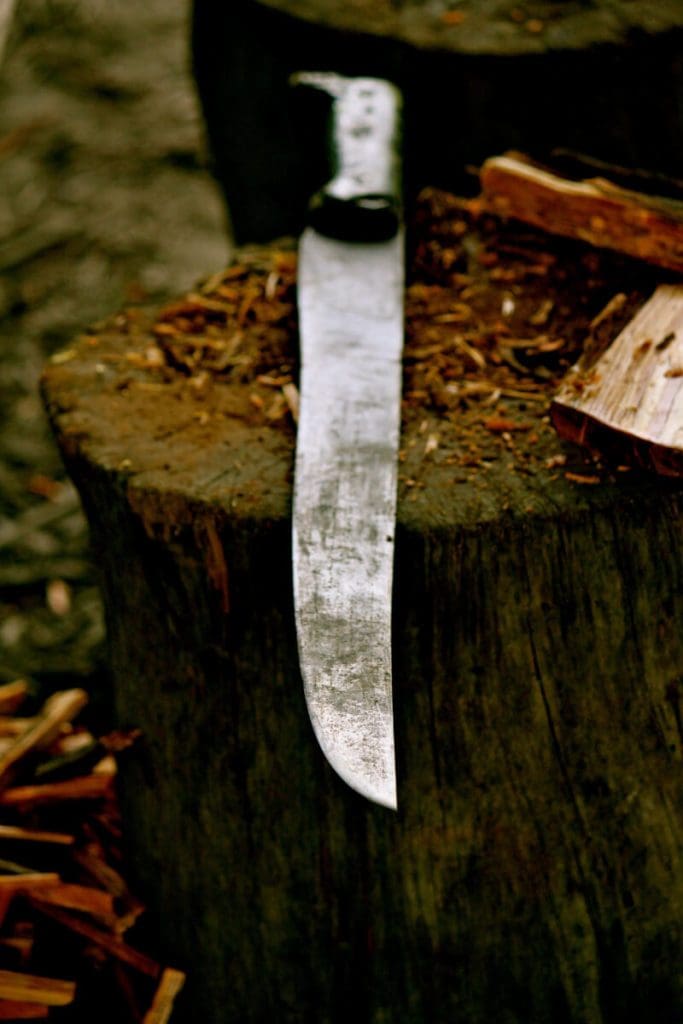
You can split the stump with an axe, but a hatchet or a large, sturdy knife (8 inch blade or longer) makes the work easier and more precise. A full-size axe is overkill.
Set the blade of the hatchet or knife on the wood and pound the back of it with a sturdy stick, like driving a wedge. Keep a few wedges handy in case the blade gets stuck.
Split the fatwood into whatever size you like and head home. You can cut smaller sticks or shavings there. We recommend both.
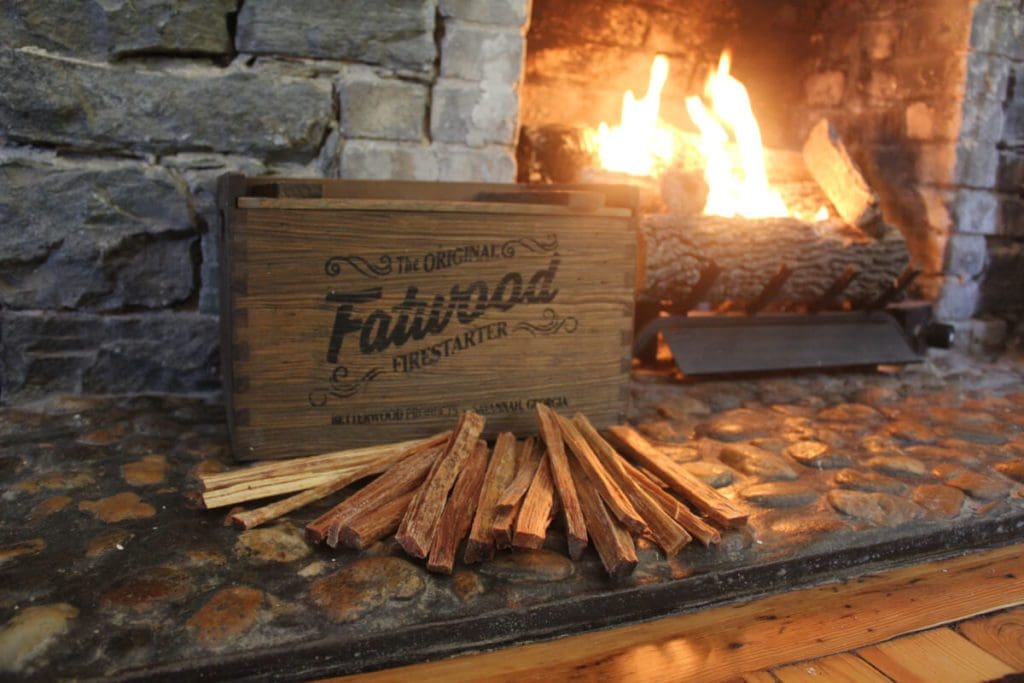
How to Use Fatwood to Start Fires
Fatwood is step one of any fire. It takes the spark or flame and stays lit long enough to light your larger kindling or charcoal.
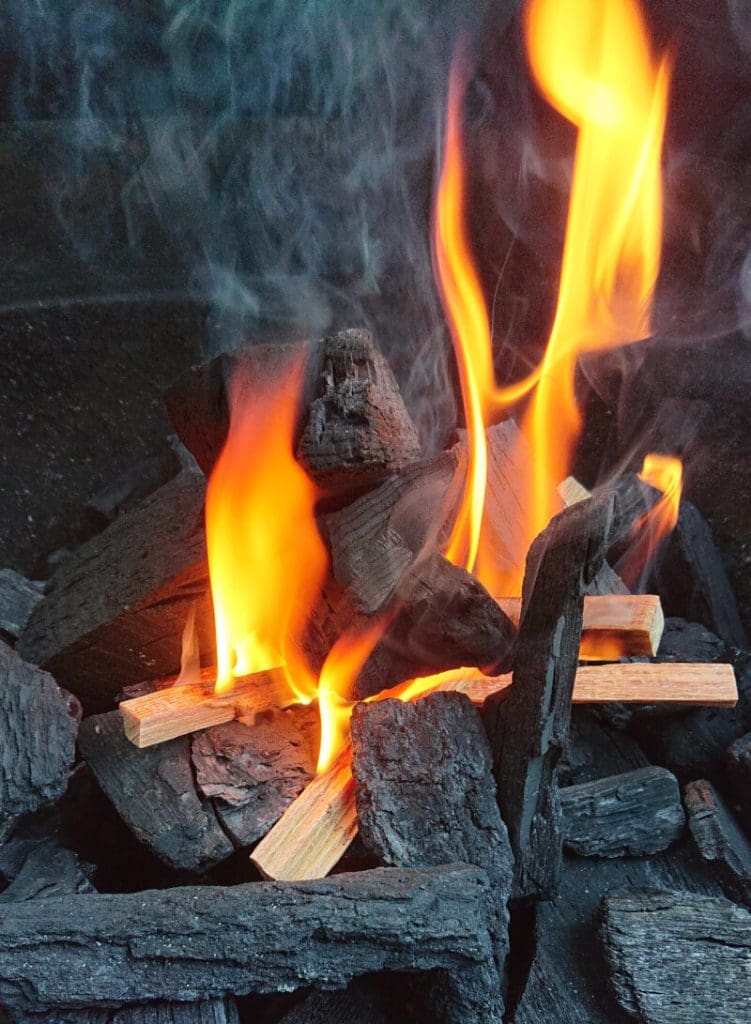
Fatwood shavings are ideal for hiking and camping. Bring a strong camp knife and a few sticks of fatwood, and slice off shavings until you have what you need. You can also make a feather stick by shaving the wood but leaving the shavings attached at the bottom of the stick.
Once the shavings take the flame, they burn very hot, so getting your dry kindling going is easy.
Fatwood also makes an excellent emergency fire starter to keep in your backpack or car trunk. Because the resin waterproofs the wood, the sticks and shavings light even when wet.
Final Thoughts
Fatwood needs no special handling or storage. It keeps indefinitely, and a little goes a long way.
One good stump can keep you supplied for a long time. When you run out, give us a call or pick up Better Wood Products fatwood at the stores listed above.